What is a SCIOS Scope 8 PI inspection?
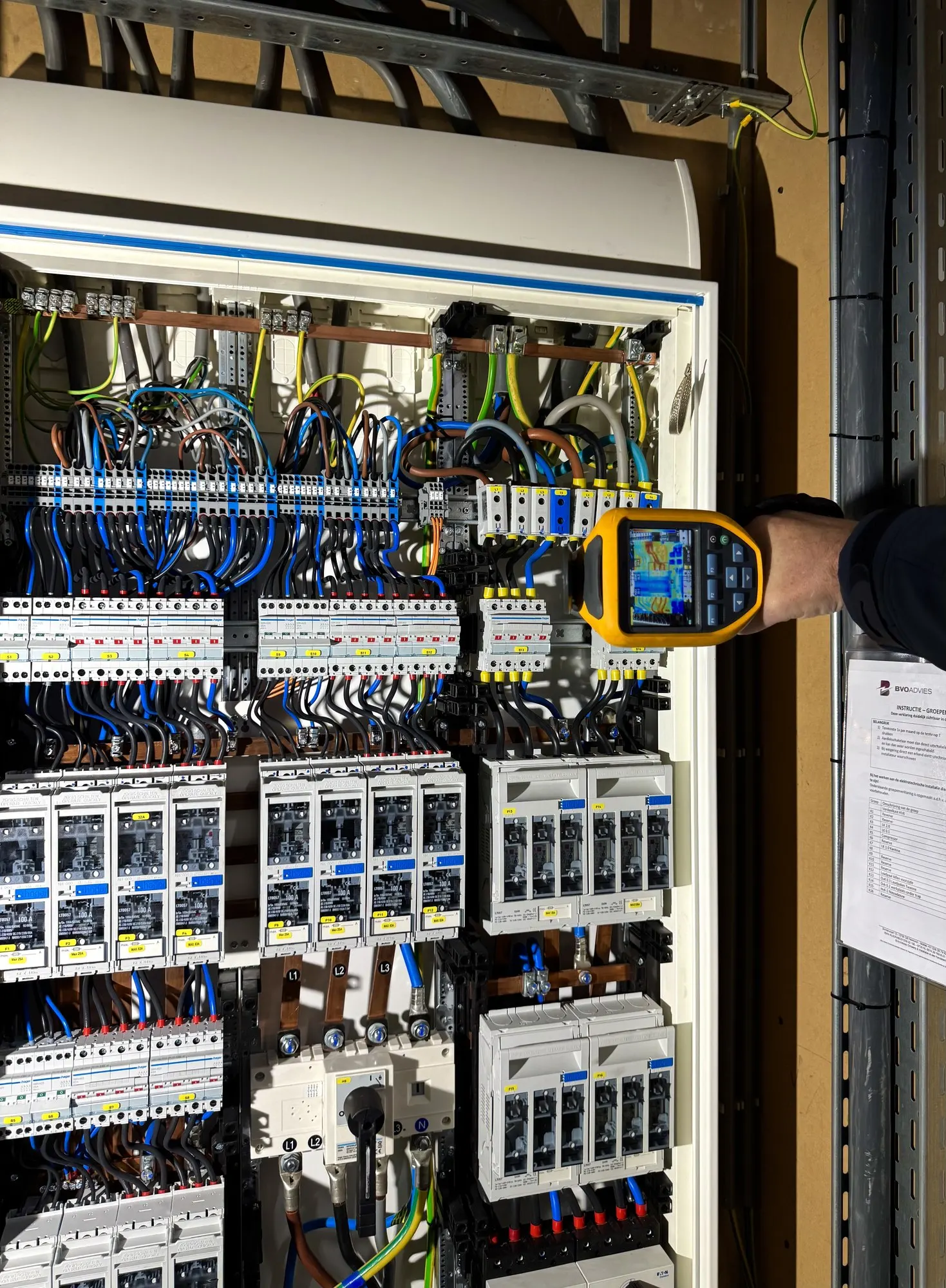
A Scope 8 PI inspection is intended for low-voltage installations in commercial buildings, utility premises, healthcare facilities and other non-residential buildings - think office complexes, shops, workshops or factory halls. It's based on the NEN 3140 standard, which sets requirements for working safely with and on electrical installations. PI stands for "periodic inspection": BVo Advies carries out this inspection on a fixed, recurring schedule, so your installation's safety stays continuously safeguarded. A Scope 8 PI inspection consists of:
- Visual inspection of the installation and wiring
- Measurements and tests, such as insulation resistance, earth resistance and leakage currents
- Assessment of documentation, including diagrams and maintenance records
- A report with findings and recommendations
- A report suitable for your insurer
This inspection may only be carried out by a certified SCIOS scope 8 PI inspector. At BVo Advies we work exclusively with certified professionals who are up to date with current standards and regulations.
How often is the inspection carried out?
The PI in Scope 8 PI stands for periodic inspection. The law sets no fixed interval. The installation manager decides it based on the use, environment and condition of the installation, as NEN 3140 requires. Using the risk method in annex I of NEN 3140, that comes out between 1.5 and 14 years. If your insurer sets a fixed term, the shorter of the two applies.
Why choose BVo Advies for a Scope 8 PI inspection?
Certified inspectors
Fully certified and trained to SCIOS guidelines, so you're assured of an expert assessment.
Clear communication
A clear, well-organised report - no technical jargon, just practical recommendations.
Solution-focused advice
We think along with you on how to improve or maintain your installation.
Experience across sectors
From offices to factories and healthcare facilities, across many types of installations.
When is a Scope 8 PI inspection required?
A Scope 8 PI inspection isn't a legal requirement, but insurers typically require it as a condition for liability insurance. It's also recommended by trade associations and health & safety services, and is an important part of good workplace safety policy. You may need one when:
- Your insurer requires it
- Your electrical installation is modified or extended
- After a fire or other incident at your business
- As part of a risk assessment (RI&E) process or enforcement by the Labour Inspectorate
Arranging a timely Scope 8 PI inspection helps you avoid disputes with your insurer and keeps you prepared for further checks.
Cost of a Scope 8 PI inspection
The cost of a Scope 8 PI inspection depends on factors including the size and complexity of your electrical installation, the number of distribution boards, and the location and accessibility of the installation. We're happy to prepare a tailored quote, so you know exactly where you stand - transparent, competitive rates with no surprises afterwards.
View our Scope 8 (PI) & 10 SCIOS certificate (PDF) Kiwa SCIOS certified - check our Scope 8 (PI) & 10 certificate in the Kiwa register
What happens after the inspection?
After the Scope 8 PI inspection, you'll receive from us:
- A complete inspection report, including findings, photos and recommendations
- A report suitable for your insurer
- Advice on possible next steps or adjustments to your installation
Common questions about Scope 8 PI
What does the PI in Scope 8 PI mean?
How often is a Scope 8 PI inspection recommended?
Is Scope 8 PI the same as Scope 10?
Is a Scope 8 PI inspection mandatory?
Is Scope 8 PI the same as a NEN 3140 inspection?
What does a Scope 8 PI inspection cost?
Ready for certainty about the safety of your electrical installation?
Get in touch with BVo Advies for a Scope 8 PI inspection. We work throughout South Netherlands, including Breda, Den Bosch, Deurne, Helmond, Oss, Tilburg, Valkenswaard, Veghel and Weert.
Request an inspection